-
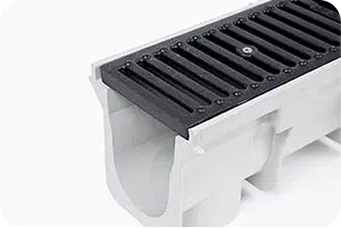
Swiftdrain
6” wide pre sloped trench drain
-
Swiftdrain
6” wide pre sloped trench drain
-
Swiftdrain
6” wide pre sloped trench drain
-
Swiftdrain
6” wide pre sloped trench drain
6” wide pre sloped trench drain
6” wide pre sloped trench drain
6” wide pre sloped trench drain
6” wide pre sloped trench drain
Already have an account?
Continue with email
New user?
Do you already have an account?
Enter the email address associated with your account to receive a link to reset your password
If that email address is in our system, you will receive an email with instructions about how to reset your password in a few minutes.
Swiftdrain
6″ wide pre sloped trench drain
Swiftdrain
6″ wide pre sloped trench drain
Swiftdrain
6″ wide pre sloped trench drain
Swiftdrain
6″ wide pre sloped trench drainProper trench drain design is essential for managing water runoff effectively, whether in commercial, industrial, or residential applications. Hydraulics, flow rate, and slope all playa critical role in ensuring a system operates efficiently, prevents water pooling, and directs run offto the appropriate discharge points. At Swiftdrain, we engineer trench drain solutions with optimized slope designs to enhance water velocity, improve drainage efficiency, and reduce maintenance needs
Measured in gallons per minute (GPM) or cubic feet per second (CFS), flow rate is determined by the amount of water runoff entering the drain
The degree of incline in a trench drain system influenceswater velocity anddischarge efficiency
The ratio of the cross-sectional area of flow to the wettedperimeter affects how efficiently water moves through the channel.
The ratio of the cross-sectional area of flow to the wetted perimeter affects how efficiently water moves through the channel.
Used to calculate the velocity of flow, considering roughness coefficients, slope, and channel shape:V=1nR2/3S1/2V=n1R2/3S1/2where: oVV= velocity (ft/sec)onn= roughness coefficient (varies by material: polymer concrete, HDPE, stainlesssteel) oRR= hydraulic radiusoSS = slope
VV= velocity (ft/sec)
nn= roughness coefficient(varies by material: polymer concrete, HDPE, stainlesssteel)
RR= hydraulic radius
SS= slope
Pre-sloped drains have a built-in continuous slope(typically 0.5% or 1.0%) that increases water velocity and enhances self-cleaning. These systems reduce debris accumulation and are ideal for commercial and industrial applications where efficient drainage is required
High-flow areas, commercial loading docks, breweries, parking lots, and manufacturing facilities
Faster drainage, reduced sediment build up, efficient water movement
Step-sloped drains maintain a neutral slope over shorter sections but drop to a lower level at intervals. This design allows water to gain momentum while accommodating changes in elevation.
Step-sloped drains maintain a neutral slope over shorter sections but drop to a lower level at intervals. This design allows water to gain momentum while accommodating changes in elevation.
Enables staged water acceleration without requiring a deep trench
Neutral drains have no built-in slope, relying instead on site grading or external pipe connections to direct water.
Applications where slope control is managed externally, such as garages,patios, and pool decks
Flexible installation, cost-effective for short runs or flat surfaces
In this configuration, trench drains slope inward toward a central outlet, allowing water from both ends to flow toward the middle. This setup is commonly used in parking garages, large patios, and sports facilities where multiple drainage points are needed.
For projects requiring multiple discharge points at each end, trench drains slope outward from a central high point, directing water to end outlets. This design is beneficial for long corridors, streetscapes, and industrial floors where multiple exit points improve water evacuation.
Selecting the correct slope depends on factors such as water volume, debris load, and site layout. Here’s a general guide