My Cart

Product image

Swiftdrain

6″ wide pre sloped trench drain
1
$2,852
Product image

Swiftdrain

6″ wide pre sloped trench drain
1
$2,852
Product image

Swiftdrain

6″ wide pre sloped trench drain
1
$2,852
Product image

Swiftdrain

6″ wide pre sloped trench drain
1
$2,852
Total $5704.00
Checkout

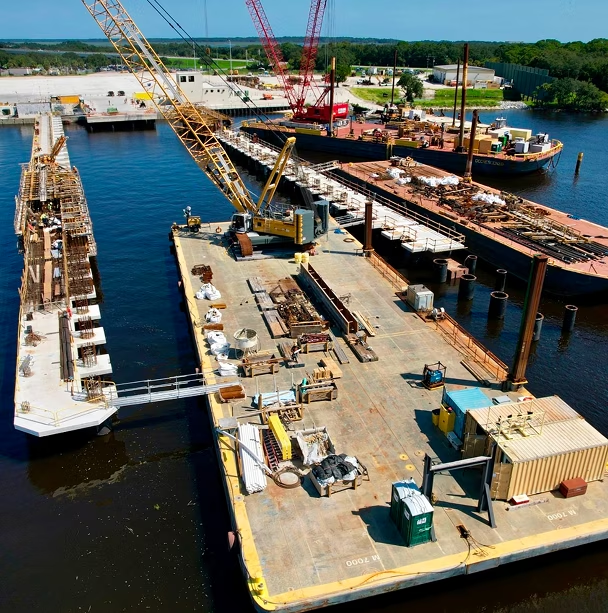
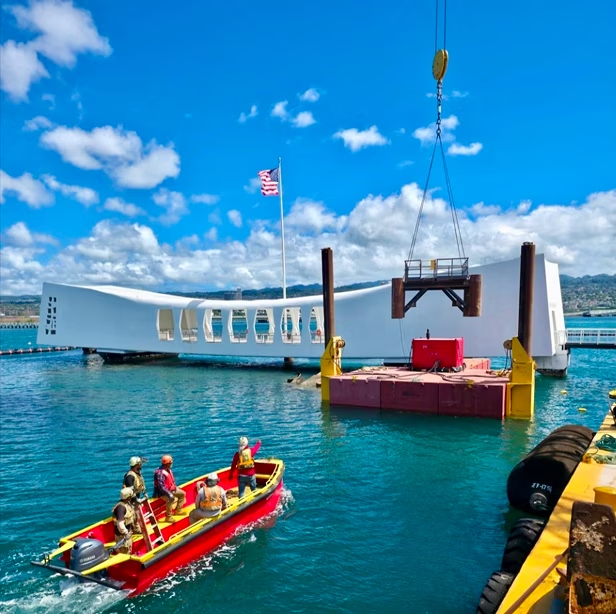
Cargo Ports & Seaports Trench Drain Systems

application image

Extreme-Duty, Corrosion-Resistant Drainage for Maritime, Logistics, and Heavy Transport Operations

Cargo ports, container terminals, intermodal transport hubs, and seaport loading areas require trench drainage systems engineered for the harshest industrial environments. These facilities experience intense mechanical loads, corrosive saltwater exposure, chemical runoff, high rainfall volumes, and constant heavy equipment traffic. Drainage must deliver long-term reliability, structural strength, and extreme corrosion resistance.

This applications page details the engineering requirements, environmental challenges, layout considerations, and recommended drainage products specifically suited for maritime and port in frastructure.

Why Proper Drainage Is Critical for Cargo Ports & Seaports

Port environments generate extreme conditions that quickly destroy inadequate drainage systems. Without properly engineered trench drains, facilities may face:

  • Flooding of dock aprons, container yards, and loading areas
  • Slip hazards for workers and crane operators
  • Damage to pavement, foundations, and quay structures
  • Corrosion from saltwater, fuels, chemicals, and marine materials
  • Operational downtime during heavy rain or storm surge events
  • Reduced efficiency and slower loading/unloading cycles
  • Environmental contamination from cargo runoff and oily residues

A high-performance trench drain system supports uninterrupted port operations and protects sensitive marine environments.

Requirements Engineering for Maritime Drainage Systems

Seaport drainage systems must withstand extreme mechanical, chemical, and environmental stresses while delivering high hydraulic performance.

applications image

Functional Requirements

High-Capacity Stormwater Flow

Must handle intense rainfall, storm surges, and washdown water

Wide channels required for rapid flow and debris handling

Saltwater and Chemical Exposure

Drain materials must resist chlorides, seawater, petroleum residues, and chemical spills

Integration with Port Surfaces

Compatible with reinforced concrete, heavy-duty pavements, and dock structures

applications image

Environmental Requirements

Marine-Grade Corrosion Resistance

Saltwater exposure demands durable materials like ductile iron and polymer concrete

Freeze–Thaw & UV Stability

Systems must resist sunlight, tidal effects, and seasonal temperature changes

Chemical Resistance

Must withstand oils, fuels, hydraulic fluid, detergents, de-icing agents, and industrial chemicals

Mechanical Requirements

Extreme Heavy Load Resistance

Cargo ports experience:

  • Gantry crane movement
  • Rubber-tired gantries (RTGs)
  • Container handlers
  • Yard tractors & heavy trucks
  • Forklifts
  • Loaded container stacks

Impact & Vibration Tolerance

  • Drains must withstand constant braking, turning, and heavy axle load

Long-Term Structural Stability

  • Channels must stay anchored in thick concrete slabs despite repetitive shock loading

Material Selection Criteria

Only the strongest materials can perform reliably in a port environment.

Load Rating Considerations

Load Class Description Port Usage
Class E Extra heavy Container yards, shipping lanes
Class F Extreme Crane paths, marine terminals

Grate Material Considerations

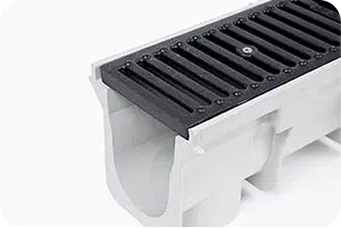
Ductile Iron Grates (300 Series & LEO 1200)

Handles extreme vehicle and crane loading

Excellent resistance to corrosion, impact, and marine conditions

Slip-resistant and rugged for dock and yard environments
Channel Material Considerations

SwiftDrain 300 Series – Ultra Heavy-Duty Polymer Concrete

Designed for the most extreme industrial and aviation environments

Increased compressive strength

Ideal for high-impact equipment paths and heavy-duty hangar bays

Site Conditions to Evaluate

Tidal Influence & Water Table

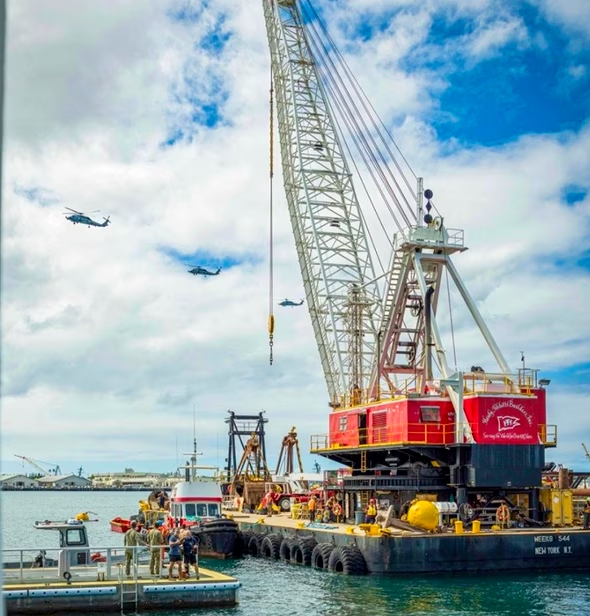
Must plan for tidal backflow, storm surges, and marine hydraulics

Chemical & Fuel Exposure

Ports handle petroleum products, chemicals, and industrial runoff
applications image

Surface Type

Compatible with high-strength concrete slabs, pavers, or reinforced pavements

Flow Requirements

Must accommodate rapid water movement from large, flat storage areas
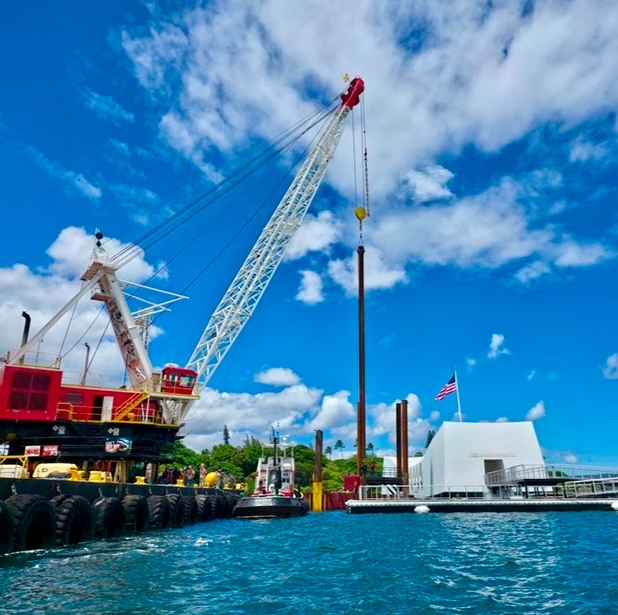
Cargo Port & Seaport Drainage Layout Considerations

Container Yards

Wide trench drains installed in main travel lanes

Supports RTGs, straddle carriers, and heavy trucks

Dock Aprons & Berthing Areas

Drains prevent water accumulation during loading and unloading operations

Must handle seawater wash and spill runoff

Access Roads & Terminal Traffic Lanes

Drains capture surface water from truck routes and inbound/outbound lanes

Maintenance & Fueling Zones

Require chemical-resistant and high-load drainage

Warehousing & Intermodal Transfer Areas

Must manage forklift movement, palletized cargo runoff, and washdown water

User and Operational Requirements

Reliability

Ports operate 24/7; drainage failures cannot interrupt operations

Durability

Systems must last decades with minimal maintenance

Ease of Maintenance

Removable ductile iron grates allow for easy debris removal

Safety

Slip-resistant grates reduce accidents in wet dock environments

Engineering Considerations

Hydraulic Design

12-inch-wide channels (LEO 1200) provide maximum flow capacity

Structural Design

Polymer concrete and cast-in-place systems withstand massive dynamic loads

Engineering Considerations

Engineering Considerations

Corrosion Control

Ductile iron and polymer materials outperform mild steel in marine conditions

Integration

Must align with port pavement, dock structures, and stormwater systems

Product Recommendation

SwiftDrain 300 Series – High-Performance Polymer Concrete

With Ductile Iron Grates | Class E / Class F Rated

Key Features

  • Extremely high compressive strength
  • Ideal for heavy container-handling equipment
  • Polymer concrete resists saltwater and chemical attack
  • Available in Class E and F for the most extreme applications

Best For

  • Container yards
  • Crane lanes and RTG routes
  • Loading and unloading paths
  • Port roadways and intermodal zones

Product Recommendation

SwiftDrain LEO 1200 – 12-Inch Cast-In-Place System

Heavy-Duty Ductile Iron Frame & Grate Assembly

Key Features

  • Extra-wide, high-flow trench system
  • Cast-in-place for maximum structural durability
  • Ductile iron frame and grate withstand heavy cranes and multi-axle loads
  • Performs reliably in extreme marine conditions

Best For

  • Dock aprons
  • Marine terminals
  • Heavy-load truck lanes
  • Fueling and maintenance zones
  • Critical areas exposed to saltwater and tidal conditions

Final Recommendations

Extreme Load, Heavy Machinery, and Saltwater Environments

Use SwiftDrain 300 Series (Class E/F)

  • Superior polymer concrete strength
  • Industry-leading durability for container handling and industrial port operations

Maximum Flow Capacity & Critical Marine Areas

Use SwiftDrain LEO 1200

  • 12-inch-wide, cast-in-place ductile iron system
  • Built for seaports, marine terminals, and heavy-duty roadway integration
join-bg

Request Technical Specifications

Enhance the safety, durability, and operational efficiency of your cargo port or seaport with trench drain systems engineered for extreme marine and industrial conditions. SwiftDrain 300 Series and LEO 1200 provide unmatched performance for high-load, high-flow, and highly corrosive environments.

Request technical specifications, CAD drawings, or consult with a port drainage specialist to begin designing your system.

Contact Us Today
join-card